
Radically changing the atmosphere of an interior doesn’t necessarily require heavy renovations or a substantial budget. The most shared decor ideas on social media and in magazines often revolve around the same recipes, but some produce a dated or cluttered effect rather than the promised result. Distinguishing the levers that truly transform a room from those that weigh it down requires understanding a few principles of visual hierarchy, light, and circulation.
False good decor plans: ideas that clutter more than they transform
Accumulating mismatched cushions, multiplying frames on a wall, or stacking decorative candles on every flat surface are recurring tips. The problem is that these successive additions end up drowning the eye. An overloaded interior appears smaller and less tidy, even if each object taken individually is beautiful.
Repurposing objects between rooms (a ladder as a towel rack, crates as shelves) can work, provided these elements are not multiplied. As soon as a room has more than two, the effect shifts to that of a jumble. Field reports diverge on this point: what looks good in a styled photo for Pinterest or a magazine often yields a very different result in a standard-sized living room.
Rather than adding, the first step remains to remove. Decluttering a room immediately transforms the perception of space. Storing objects that do not have a daily function, clearing horizontal surfaces, and limiting visible elements to a few chosen pieces creates a cleaner effect than any decor purchase. Those interested in decor on Les Bricoleries de Nanie find concrete approaches to work on this sobriety without falling into a cold interior.
Focal point and visual hierarchy in a living room or living space
Recent content on interior decoration converges on one principle: every room benefits from having a single focal point. In a living room, it’s often the sofa, a wall art piece, or a fireplace. When three or four elements compete for attention, none stand out, and the room gives an impression of disorder.
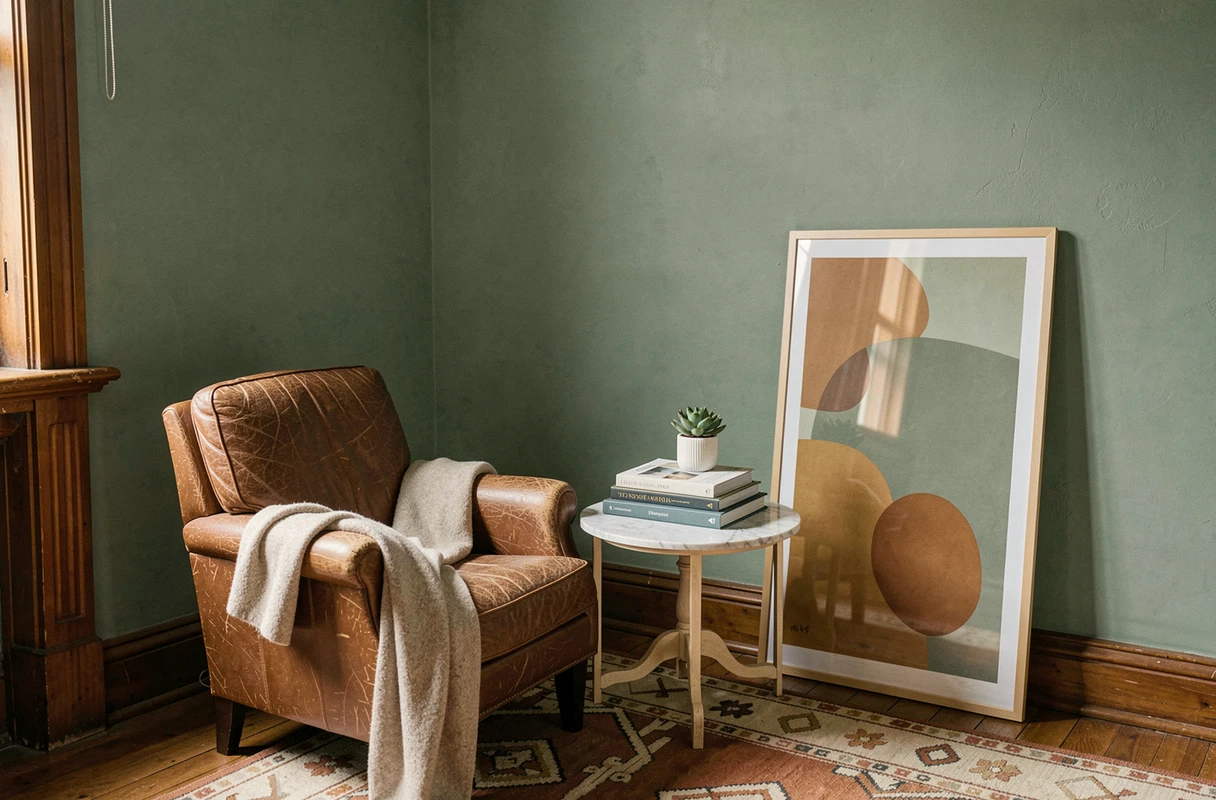
Creating this hierarchy does not require replacing everything. Sometimes, simply repositioning a piece of furniture can direct the gaze towards one wall rather than another, or removing an overly imposing rug that competes with a colorful sofa. Coherence takes precedence over the quantity of decorative elements.
Colors play a direct role in this hierarchy. Two dominant shades and one accent color are enough to visually structure a room. Beyond that, the result becomes messy. Monochromatic palettes (several shades of the same color) allow for texture variation without risking visual clashes, a simple lever for a living room or open kitchen.
Legged furniture and free circulation
Comfort of use is also a decor lever. Legged furniture clears the floor and visually lightens the room, an effect measurable as soon as a massive floor-standing buffet is replaced by an elevated model. Leaving passages free of at least the width of a body between furniture improves circulation and gives an impression of a larger space.
Layered light: replacing a single pendant with strategic lighting
Lighting remains the most underutilized lever in interior decoration. The majority of interiors rely on a central ceiling fixture, which casts flat and unflattering light across the entire room.
The principle of layered light is based on three levels:
- A soft general lighting (dimmer ceiling light or adjustable spots) that provides a luminous base without glare
- A targeted functional lighting (reading lamp, kitchen countertop lighting) positioned where an activity requires it
- An ambient lighting (string lights, table lamps, LED strips behind a piece of furniture) that creates depth and sculpts the volumes of the room
Warm color temperatures, around golden tones, make a living room or bedroom more welcoming than the cold white lights often provided by default. Simply replacing existing bulbs with warm temperature models changes the atmosphere of a room without any new lighting purchases.
Seasonal and reversible decoration: transforming without commitment
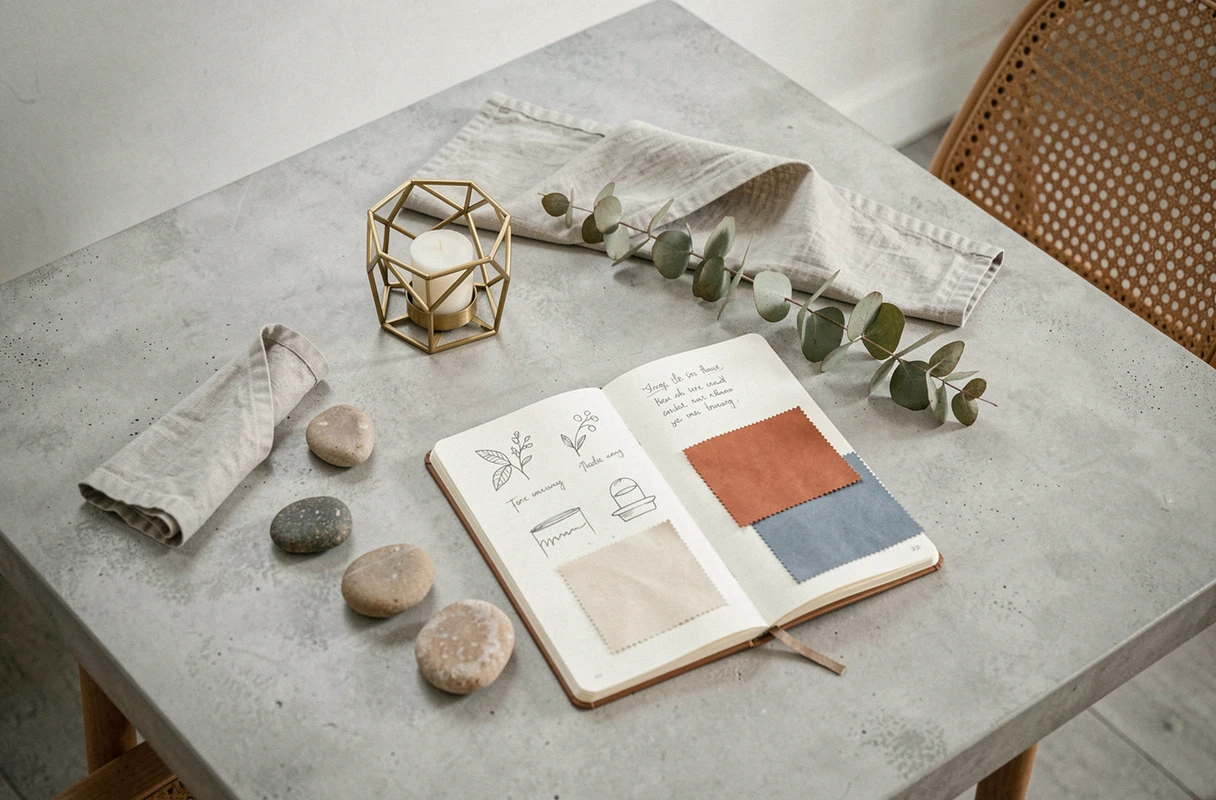
The reversible approach is gaining ground in current decor ideas. Rather than repainting an entire wall, easily interchangeable textiles (cushion covers, throws, curtains) allow for changing the ambiance of a room in just a few minutes.
This seasonal logic works particularly well:
- In winter, thick materials (wool, velvet) and deep shades create a cocooning atmosphere
- In spring, lighter fabrics (linen, washed cotton) and light or pastel colors lighten the room
- Bouquets of fresh or dried flowers, changed regularly, bring life without cluttering
- Dedicated storage boxes or baskets store off-season items to avoid accumulation
A modular decor costs less than a renovation and allows for testing styles without commitment. Textiles remain the most accessible item for transforming an interior: changing the curtains in a living room is sometimes enough to completely alter the perception of light and space.
Customize rather than buy new
Repainting an existing piece of furniture, changing the handles on a dresser, or recovering a worn seat gives a second life to items that would have ended up in a landfill. These interventions require little material and produce an immediately visible result, provided you choose colors that are coherent with the rest of the room.
The most sustainable decor ideas are those that start from what exists rather than from a catalog. A functioning interior relies on a few strong choices (a focal point, well-thought-out lighting, cleared surfaces) rather than on an accumulation of trends. The next time an article promises a transformation by adding twenty objects, the most effective reflex remains to ask what could be removed instead.