
Which renovation works really deserve to be launched in 2026, and based on what criteria should one decide between insulation, carpentry, and heating? The answer depends less on decor trends than on the regulatory framework: since the start of September 2026, MaPrimeRénov’ has eliminated funding for most isolated actions. This change alters the strategy of any home renovation project.
Global renovation or isolated action: what financial aid now requires
The MaPrimeRénov’ scheme has shifted to a model focused on global renovation aiming for a gain of at least two energy performance certificate (DPE) classes. Since September 1, 2026, only a few actions remain eligible for standalone funding: heat pump for heating, connection to a heat network, and removal of an oil tank.
For all other works (wall insulation, window replacement, installation of a mechanical ventilation system), funding goes through a supported process with an approved operator. Combining works is no longer an option among others; it is the condition to access public aid.
| Type of work | Eligible alone (Sept. 2026) | Eligible in global renovation |
|---|---|---|
| Heat pump (heating) | Yes | Yes |
| Connection to heat network | Yes | Yes |
| Removal of oil tank | Yes | Yes |
| Wall/roof insulation | No | Yes |
| Window replacement | No | Yes |
| Installation of mechanical ventilation system | No | Yes |
| Thermodynamic water heater | No | Yes |
This table summarizes the central decision-making of any home renovation project in 2026. Even before choosing a material or a contractor, it is necessary to determine whether the project falls into the supported process or remains among the few actions still individually funded. To better frame this reflection, you can consult the works on Perspective Maison and compare the types of interventions possible.
Renovation budget and remaining costs: how the figures have evolved
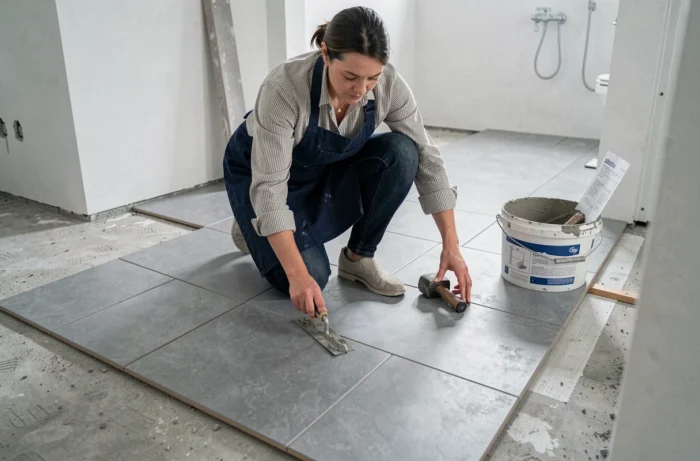
Large-scale renovation projects are more expensive than before. According to an analysis published at the end of July 2026, the average cost of large-scale renovation work in 2024 significantly exceeds the levels of 2023. Projects are more ambitious: nearly 80% of renovations with known characteristics reach a “BBC renovation first stage” level in 2024, compared to barely a quarter in 2022-2023.
On the other hand, the share covered by public aid has increased, which lowers the average remaining costs, particularly for low-income households. The eco-PTZ remains available to finance insulation, mechanical ventilation systems, or water heaters that are outside the MaPrimeRénov’ process by action.
What this changes for your project
A renovation budget is no longer calculated item by item. The logic of combining works reduces the overall remaining costs compared to several successive interventions. Planning insulation, ventilation, and heating in the same project allows for benefiting from the maximum aid rate.
Starting with attic insulation alone, then returning two years later for the mechanical ventilation system, and then even later for the windows, means paying for each intervention at full price without subsidies. The sequence is as important as the choice of materials.
Order of energy renovation works: the technical sequence to respect
Even within a grouped project, the order of execution is not interchangeable. ADEME recommends a precise logic that conditions the actual effectiveness of the works.
- Insulation first (roof, walls, ground floors): reducing thermal losses before sizing the heating system prevents oversizing a boiler or heat pump.
- Ventilation next: a well-insulated but poorly ventilated home accumulates humidity. The installation of a double-flow or hygro B mechanical ventilation system must follow immediately after insulation, never precede it.
- Heating and hot water production last: the actual thermal needs of the home can only be known after insulation and ventilation. Installing a heat pump before insulating leads to oversized equipment, which is more expensive and less efficient.
Reversing this sequence does not only pose a comfort issue. It compromises the targeted gain in DPE classes aimed at by the supported process, and thus eligibility for financial aid.
Windows: where to place them in the schedule
Window replacement is interspersed after wall insulation and before heating installation. High-performance windows installed on poorly insulated walls create a thermal bridge around the frame. The carpentry must be integrated into the overall insulation plan, not precede it.
The trap of fragmented projects: why renovation in stages costs more
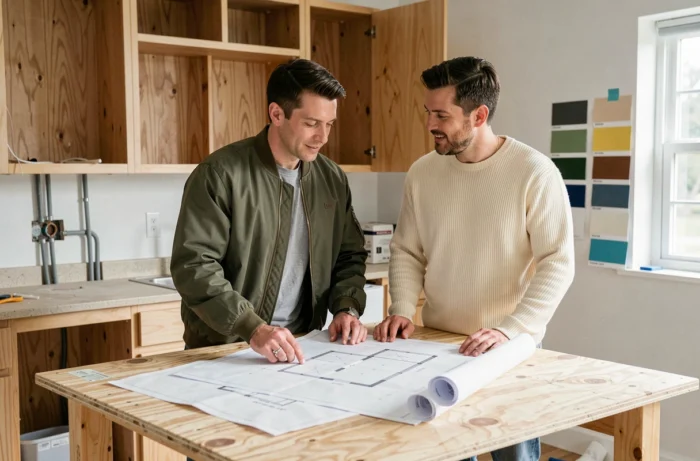
Many homeowners prefer to spread the work over several years for cash flow reasons. This approach, long encouraged by aid for isolated actions, loses all financial advantage since September 2026.
Fragmentation generates direct additional costs: remobilization of craftsmen, redoing plaster, scaffolding set up and taken down at each phase. It also generates indirect additional costs: each isolated action not aided represents a total remaining cost higher than the same set of works carried out in a single supported operation.
The only scenario where fragmentation makes sense concerns homes classified F or G whose owner cannot finance the entire project, even with aid. In this case, the strategy is to identify the actions still individually funded (heat pump, removal of oil tank) and carry them out first, then launch the global renovation at a later stage.
Choosing a Renov’ supporter: the filter before any quote
The supported process requires going through an approved operator, now accessible via the France Rénov’ portal. This supporter conducts the energy audit, defines the work scenario, and oversees the project until completion.
Its role is not limited to advice: without an approved supporter, the MaPrimeRénov’ large-scale renovation file is not admissible. Contacting them before requesting quotes avoids sizing a project that would not meet eligibility criteria.
The increase in large-scale renovations in 2024, with projects significantly more ambitious than in 2022-2023, shows that the framework works when the project is structured from the outset. Renovating your home remains a significant investment, but recent data confirms that the remaining costs decrease for those who agree to combine works and follow the technical sequence suited to their home.