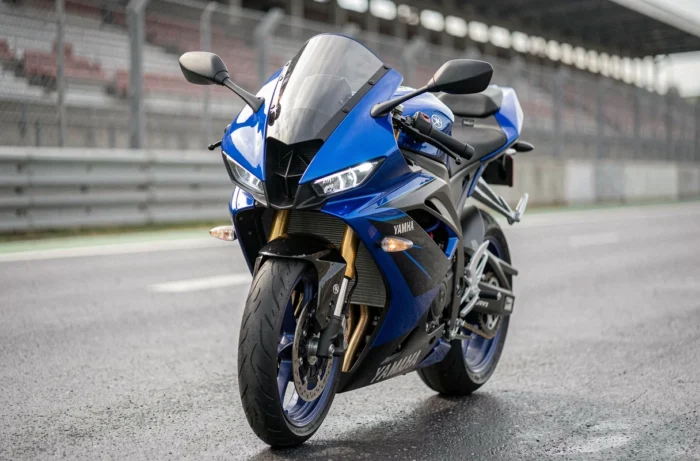
The 890 cc CP3 in a lightweight Deltabox frame, electronics derived from MotoGP, and a price tag of €13,999: the Yamaha R9 does not aim to replace the R1 but to fill a gap that has been vacant since the R6 was discontinued. It remains to be seen for which type of rider this three-cylinder architecture truly surpasses the alternatives.
CP3 890 cc vs. 600 four-cylinder: the real technical arbitration on track
The inline three-cylinder CP3 produces 119 hp and 93 Nm. On paper, the torque available from mid-range crushes that of an older 600 four-cylinder that required revving above 10,000 rpm to be relevant. Coming out of a tight corner, this availability changes the game for an intermediate track-day rider.
We observe that the CP3 forgives gear ratio errors on corner entry, where a 600 would immediately penalize a too-long gear with a complete lack of acceleration. For a rider who logs three or four track days per season, this mechanical tolerance reduces mental load and shortens the learning curve.
However, an experienced club racer will find a ceiling: the power band, less sharp than a high-revving four-cylinder, limits pure lap time potential beyond a certain level. Buying a used R1 for the same budget remains relevant if the goal is raw lap time, not progression.
The available information on the future Yamaha R9 motorcycle confirms that Yamaha has directed this project towards sporting accessibility rather than absolute performance.
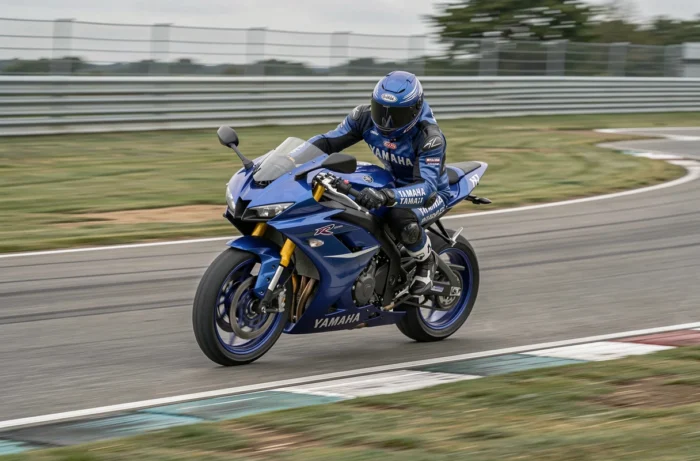
Yamaha R9 electronics and Y-TRAC: beyond the marketing gadget
The onboard electronic package deserves attention. The Yamaha Ride Control includes traction control, anti-wheelie, slide control, and engine modes, all individually adjustable. This is not just a simple “rain/sport/race” selector: each parameter can be set at multiple levels.
The most underestimated feature is Y-TRAC, the connected telemetry system. It allows recording riding data (angles, accelerations, braking points) and analyzing them after the session. For a rider who wants to progress methodically on track days, it’s an embedded coaching tool.
- Adjustable traction control at multiple levels, deactivatable for experienced riders who want to manage slide manually
- Configurable anti-wheelie, useful when exiting a tight chicane where the CP3 pushes hard mid-range
- Y-TRAC for post-session analysis: lean angles, sector times, braking points compared lap by lap
- Customizable engine modes that allow decoupling throttle response from the level of intervention of aids
Once a rider actively uses this data to correct their lines, the R9 becomes more educational than a used R1 lacking this layer of analysis. It is the level of practice that determines the relevance of the machine, not the raw power.
Deltabox chassis and frame: real behavior in corners
The aluminum Deltabox frame of the R9 is claimed to be the lightest ever mounted on a Yamaha supersport. With a weight of 195 kg fully fueled, the machine falls into an aggressive weight category for an 890 cc.
Tests converge on one point: the R9 is very agile on corner entry and forgiving when the rider arrives a bit too fast. This behavior reassures a progressing rider. The fully adjustable KYB fork and shock allow the machine to be tailored to the rider’s weight, skill level, and the day’s track.
However, the perceived stability is described as less stoic than that of a Honda CBR600RR on the track. On a fast layout with long high-speed curves, the three-cylinder transmits more feedback to the rider, requiring more physical commitment. For an occasional track rider, this lively behavior is an asset. For a competitor, it’s a factor to consider.
Brembo Stylema braking and 320 mm discs
The Brembo front master cylinder paired with Stylema calipers and 320 mm discs places the R9 among high-end sportbikes in terms of braking. The deceleration power is more than sufficient for mixed road-track use.
The lever feel, progressive and powerful, allows for late braking without surprises. This is an area where Yamaha has not compromised on budget, and it is immediately noticeable.
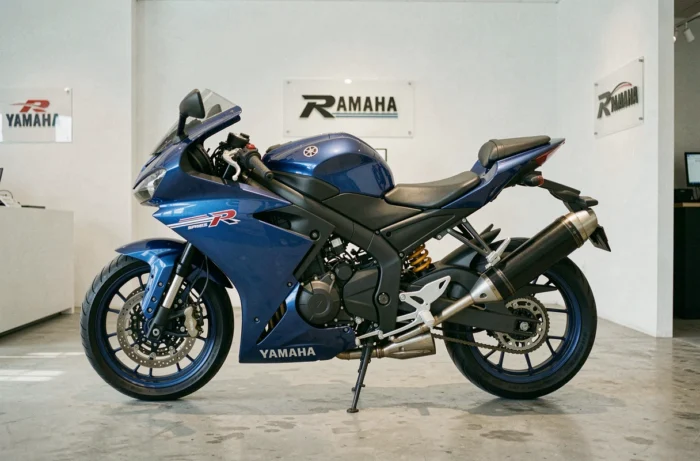
Yamaha R9 on the road: a sportbike that doesn’t punish daily
With a 14-liter tank and a riding position described as less extreme than that of an R1, the R9 remains usable for road outings. The seat, while not a couch, does not turn every ride into a lower back workout.
The real road argument for the CP3 is its flexibility at low revs. In the city or on winding country roads, the engine accepts modest revs without stuttering. The softest engine modes smooth the throttle response enough for daily use.
The aerodynamic fairing with winglets, inherited from MotoGP design, generates downforce at high speeds but is not cumbersome in urban traffic. The width remains contained, and maneuverability at low speeds poses no particular difficulty.
R9 or used R1: which choice according to rider profile
For a rider who logs two to four track days a year and uses their motorcycle on the road the rest of the time, the new R9 at €13,999 offers a more coherent package than a used R1 at the same budget. Manufacturer warranty, updated electronics, Y-TRAC telemetry, and new consumables weigh in the balance.
For a rider aiming for club competition with benchmark lap times, the used R1 retains an advantage in raw power and high-speed stability. The inline four remains superior beyond a certain performance threshold, but the maintenance and reliability of a high-mileage machine add a significant budget variable.
The positioning of the R9 should not be understood as a replacement but as a different proposition: to progress technically with a modern tool rather than manage the raw power of a machine designed for Superbike.