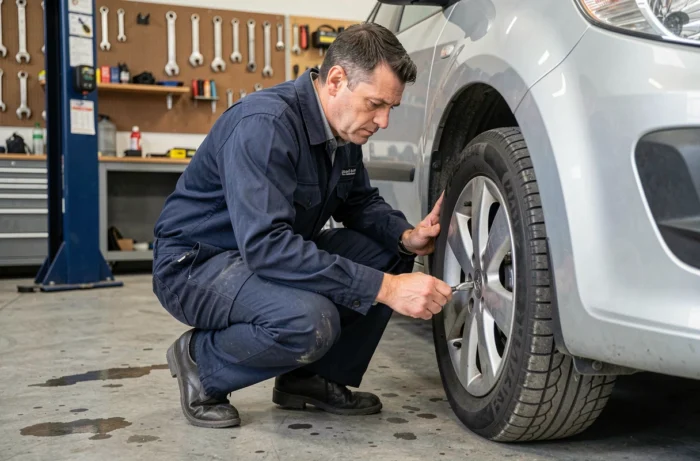
Choosing a car and keeping it in good condition involves considering several parameters: acquisition budget, recurring maintenance costs, mechanical reliability, and regulatory constraints. The challenge lies not in the list of operations to be performed, which any manufacturer’s manual details, but in the hierarchy of priorities depending on the type of vehicle, its age, and its actual use.
Annual Maintenance Cost by Type of Engine
The choice of an engine type directly influences the maintenance budget over several years. The differences are not negligible, and they often guide the purchasing decision as much as the catalog price.
| Criteria | Gasoline | Diesel | Electric |
|---|---|---|---|
| Engine Oil Change | Every year or according to manufacturer mileage | Every year or according to manufacturer mileage | Not applicable |
| Particulate Filter | Rare (some recent models) | Periodic replacement | Not applicable |
| Brake Pads (wear) | Standard wear | Standard wear | Reduced wear due to regenerative braking |
| Timing Belt | Replacement as recommended | Replacement as recommended | Not applicable |
| Technical Inspection | Every two years | Every two years | Every two years |
An electric vehicle eliminates several mechanical expense items (oil change, timing belt, exhaust). However, replacing a traction battery represents a very high cost if the manufacturer’s warranty has expired. The most expensive item varies depending on the chosen engine type.
For more in-depth comparisons by model and engine type, resources like mon-guide-auto.fr compile useful data before a purchase.
Connected Diagnostics and Predictive Maintenance for Individuals
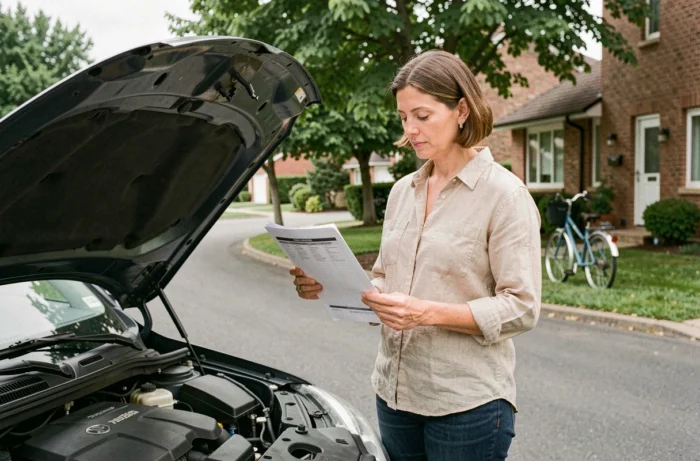
Classic maintenance guides recommend checking fluid levels, tire condition, and brakes. These tips remain valid. What has changed is the arrival of connected diagnostic tools incorporating artificial intelligence, now accessible to individuals via OBD devices and mobile applications.
These devices plug into the vehicle’s diagnostic port and transmit real-time data to an application. This application relies on online databases to suggest targeted maintenance operations, even before a visible symptom appears.
Predictive maintenance systems based on sensors and AI allow for anticipating failures. This approach goes beyond simply reading error codes: the analysis focuses on the evolution of engine parameters, consumption, or temperature over several weeks.
- Consumer OBD devices often cost less than a single diagnostic visit at an auto center, and they allow for continuous monitoring
- The associated applications alert users to anomalies in oil pressure, coolant temperature, or battery voltage
- The data history facilitates communication with the mechanic during the annual service, precisely identifying points to monitor
This type of tool does not replace the intervention of a professional, but it reduces the risk of unexpected breakdowns and allows for spreading expenses instead of facing a heavy repair.
Technical Inspection: The Reform That Expands Obligations
The technical inspection for passenger cars remains mandatory every two years. Online content covers this topic well. What is rarely mentioned is the extension of the technical inspection to category L vehicles (motorcycles, quads, cars without a license).
The decree of October 23, 2023 established the practical framework for this new inspection, with effective implementation starting from April 15, 2024. Households that own a two-wheeler or a quad in addition to their car must include this additional item in their annual budget.

For cars, the list of points checked during the technical inspection has also tightened in recent years. A vehicle may be denied validation for defects that would have been tolerated before, particularly regarding the exhaust system or lighting.
- The re-inspection must be carried out within two months after a refusal, under penalty of sanctions
- Approved centers for category L are not yet as widespread as those for cars, which may extend appointment wait times
- Regular maintenance of the checked points (brakes, lighting, fluid levels) significantly reduces the risk of re-inspection
Tire Pressure and Brake Fluid Condition: Two Underestimated Areas
Among all periodic checks, two areas account for a disproportionate share of failures observed during the technical inspection: tire pressure and brake fluid level.
An under-inflated tire accelerates uneven wear of the tread and increases fuel consumption. Checking the pressure when cold once a month is enough to prevent these two problems. Reference values are found on the label affixed to the driver’s door frame or in the maintenance booklet.
The brake fluid, on the other hand, absorbs moisture over time. This gradual degradation reduces braking efficiency without producing a visible signal for the driver. Replacement is recommended according to the manufacturer’s periodicity, generally every two years, but this item is often forgotten between two services.
Conversely, some items like windshield washer fluid or body cleaning, while useful, have no impact on mechanical safety. Focusing attention and budget on braking components and tires remains the priority for a safe vehicle compliant with the technical inspection.
The choice of a vehicle and its maintenance boils down to a logic of cost per item and frequency of intervention. Connected diagnostic tools redistribute the cards by allowing individuals to anticipate breakdowns rather than suffer them. The tightening of the technical inspection, extended to category L since April 2024, adds a budgetary constraint that multi-vehicle households should plan for right from the purchase.