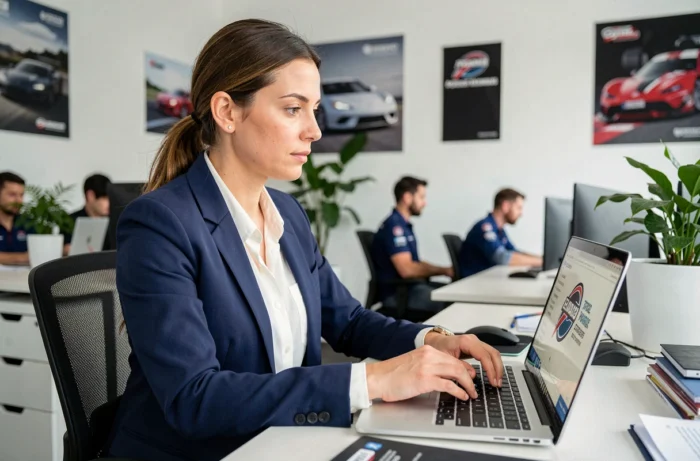
Web form, chatbot, phone call, messaging built into the website: the ways to contact an automotive professional have multiplied. Not all are equally fast or effective, depending on the nature of your request.
Which channel gets the fastest response for a quote, complaint or breakdown? And when should you stop using a chatbot and insist on speaking to a person? The differences between these options are worth weighing up before you write a single message.
Comparing automotive contact channels: speed, personalization and data shared
Your choice of channel directly affects response time, the level of personalization and the amount of personal information you share. The table below summarizes these three factors for the most common channels offered by dealerships and brands.
| Channel | Typical response time | Personalization | Data shared |
|---|---|---|---|
| Phone call | Immediate (during opening hours) | High (direct conversation) | Voice, identity, sometimes VIN |
| Messaging built into the website | A few hours to one business day | Medium to high | Email, description of your needs |
| Web form | One to several business days | Variable (responses are often standardized) | Name, email, phone number, vehicle details |
| Chatbot | Instant (scripted responses) | Low without human support | Conversation text retained |
| Direct email | One to several business days | High if sent to the right person | Email, unrestricted attachments |
Large automotive dealer groups are more likely to offer messaging built into their website than a WhatsApp number as a direct contact channel. Before looking for a WhatsApp Business account, check the dealership’s website messaging: it is generally the channel the sales team monitors most closely.
For any request concerning a specific vehicle, have the VIN or registration number ready. The Renault Assistance guide, for example, recommends having your registration number to hand when calling, and some in-vehicle systems automatically send your location and technical information to the assistance center. Providing the VIN in your first message cuts down on back-and-forth and speeds up the process, whatever channel you choose.
When you want to contact the Clic Auto team for a quote or a question about a vehicle, the same principle applies: include the reference number or model when you first get in touch to avoid an extra exchange.
Automotive chatbots and personal data: when to switch to a human representative
A chatbot responds quickly, but that speed can be misleading as soon as your request falls outside its script. It works well for opening hours or an address. For a personalized quote, an after-sales complaint or a dispute, it becomes an obstacle.
The CNIL notes that a conversation with a chatbot without human intervention should not, on its own, lead to certain important decisions. It also sets out the rules for collecting and retaining conversation data. Before sharing personal details in a chat window, check two things:
- Does the chatbot explain how long your messages will be kept and how they will be used? If this information is missing, stick to general questions.
- Is there a button or command to request a human representative? If the bot keeps going in circles without offering a transfer, switch to a phone call or direct email.
- Can data entered in the chat (registration number, contact details, description of the problem) be deleted on request? Regulations provide for this, but the interface does not always make it easy.
A chatbot that does not offer a way to speak to a human is not a reliable contact channel for a complex request. It is a filter, not a solution.
Choosing the right contact for your needs: dealership, brand customer service or roadside assistance
Contacting the wrong department is the main cause of delays. The reason for your inquiry determines who you should contact, and choosing the wrong recipient can easily add several days to the process.
Repair or purchase quote: your local dealership
The dealership knows the local situation: parts inventory, workshop availability and the vehicle’s history if it was purchased there. For a service quote or a question about a model in stock, it should be your first point of contact. Use the website messaging or call directly rather than the brand’s general form, which will redirect you to the dealership anyway.
Unresolved complaint: the brand’s customer service team
If the dealership has not followed up or the dispute concerns a manufacturer’s warranty, the brand’s customer service team can take over. This channel handles cases that the local dealer network cannot or will not resolve. Prepare a chronological summary of previous exchanges: dates, names of representatives and case references.
Breakdown or vehicle immobilized: the dedicated assistance channel
A roadside breakdown is a matter for roadside assistance, not the dealership. Manufacturers have dedicated phone numbers, sometimes accessible through the vehicle’s in-car system. Calling from the vehicle may automatically send your location and certain technical data, speeding up the dispatch of a recovery vehicle.
Prepare your request to get a faster response
Response time depends as much on the sender as on the recipient. An incomplete message prompts a follow-up question, adding another response cycle and costing you one to two business days.
An effective first message includes three things:
- Vehicle identification: make, model, year and, if possible, the VIN or registration number. This information lets the representative check the vehicle’s history without contacting you again.
- A specific reason for your inquiry: “quote for timing belt replacement” will get a faster response than “I’d like a quote for my car.”
- Your preferred response channel: if you would rather receive a phone call than an email, say so. Teams juggle several message queues, and specifying how you want to be contacted avoids attempts through multiple channels.
A web form is still useful when you do not need a response the same day. For an urgent request, a direct call or messaging built into the website are the most reliable options. A chatbot is only suitable if your question can be asked in one sentence and does not require a review of your case.
The point is not to use the most modern channel, but the one that gets your request to the right person with the right information from the outset.